A targeted German cockroach cleanout protocol serves high-density infestations where retail consumer pyrethroid sprays fail due to behavioral aversion and physiological resistance. Consumer aerosols trigger a dispersal…
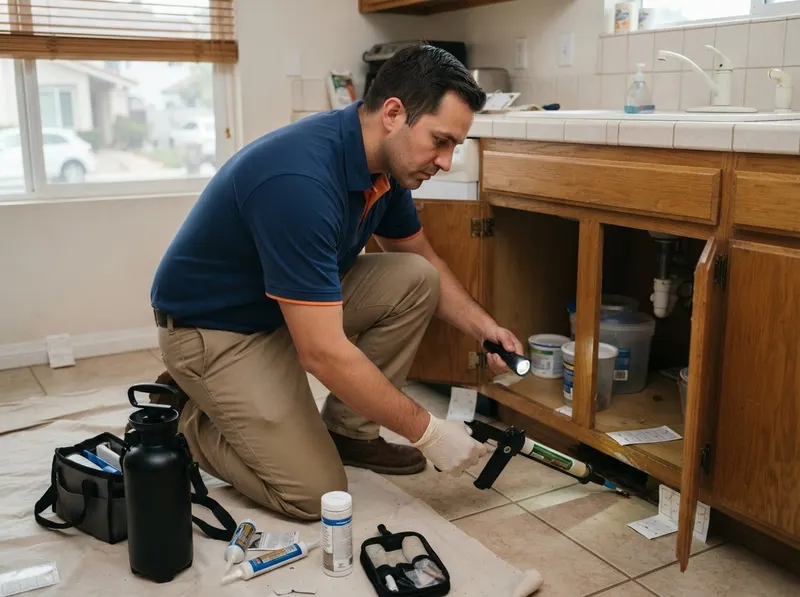
A targeted German cockroach cleanout protocol serves high-density infestations where retail consumer pyrethroid sprays fail due to behavioral aversion and physiological resistance. Consumer aerosols trigger a dispersal response, scattering breeding populations out of kitchen cabinets and into neighboring drywall cavities or adjacent living spaces. Bravion Bug Solutions applies non-repellent active ingredients paired with an insect growth regulator (IGR) like hydroprene. This chemistry prevents nymphs from molting into reproductive adults and stops female ootheca maturation without driving pests deeper into baseboards. In multifamily apartment complexes common throughout Pacific Beach, North Park, and Hillcrest, pipe penetrations between shared kitchen walls act as immediate transit corridors. Treating only exposed surfaces leaves 80% to 90% of the breeding biomass untouched inside the wall voids. The trade-off between standard preventative barrier treatments and an intensive cleanout protocol rests on preparation requirements: a full protocol demands emptying kitchen cupboards, clearing drawer contents, pulling appliances away from wall connections, and vacating indoor pets during the wet application phase.
Microclimate variations across San Diego County dictate harborage zones and treatment dynamics. In coastal communities such as Ocean Beach, Point Loma, and La Jolla, higher ambient relative humidity inside older crawlspaces and raised-foundation cottages accelerates bait moisture retention, requiring precise bait matrix rotation to prevent mold contamination. Inland areas such as Mission Valley, Clairemont Mesa, Carmel Valley, and Scripps Ranch generate higher interior temperatures during summer peaks, which speeds the Blattella germanica reproductive cycle from 28 days down to roughly 21 days per generation. Remediation relies on a precise sequence: 1. Deep mechanical inspection of appliance motor housings, refrigerator condensation pans, and under-sink plumbing collars. 2. Vacuum extraction of live aggregations using HEPA-filtration equipment to immediately reduce allergen loads. 3. Void micro-dusting using pharmaceutical-grade silica gel to desiccate hiding nymphs. 4. Strategic placement of non-drying insect bait matrices applied in micro-dots every 12 to 18 inches along interior joinery.
A single cleanout treatment does not instantly dissolve unhatched egg cases. German cockroach oothecae are biologically impervious to chemical contact barriers while carried by the female. A mandatory follow-up evaluation occurs at the 14-to-21-day mark to intercept newly emerged first-instar nymphs before they achieve reproductive viability. Standard monthly maintenance services maintain exterior defensive rings; the intensive cleanout protocol is reserved for confirmed interior biological incursions in residential food preparation zones.
Every job gets a firm, written price after a free on-site visit.
Tell us about your german cockroach cleanout protocol job in San Diego and we'll send a clear, written quote, usually the same day.
 Bravion Bug Solutions